
AI and the Law in Zambia: Who Checks the Answer?
2026-10-16
A conversation with legal officer Elisha Zulu about plain-language law, Zambian legal research, AI drafting, and evidence that looks convincing but still needs verification.
Understanding the words
AI could make legal language more accessible, including through Nyanja explanations. The challenge is preserving the obligations, conditions, and exceptions that give a clause its meaning.
Checking what we rely on
Research, drafts, and digital evidence need sources and qualified scrutiny. A locally relevant legal knowledge base could help, while leaving professional judgment and responsibility with people.
A contract can be written in clear-looking English and still leave the person expected to sign it unsure what they are agreeing to. A chatbot can offer an explanation in seconds. But if that explanation drops an important condition, has it helped the person understand their position, or given them confidence in something inaccurate?
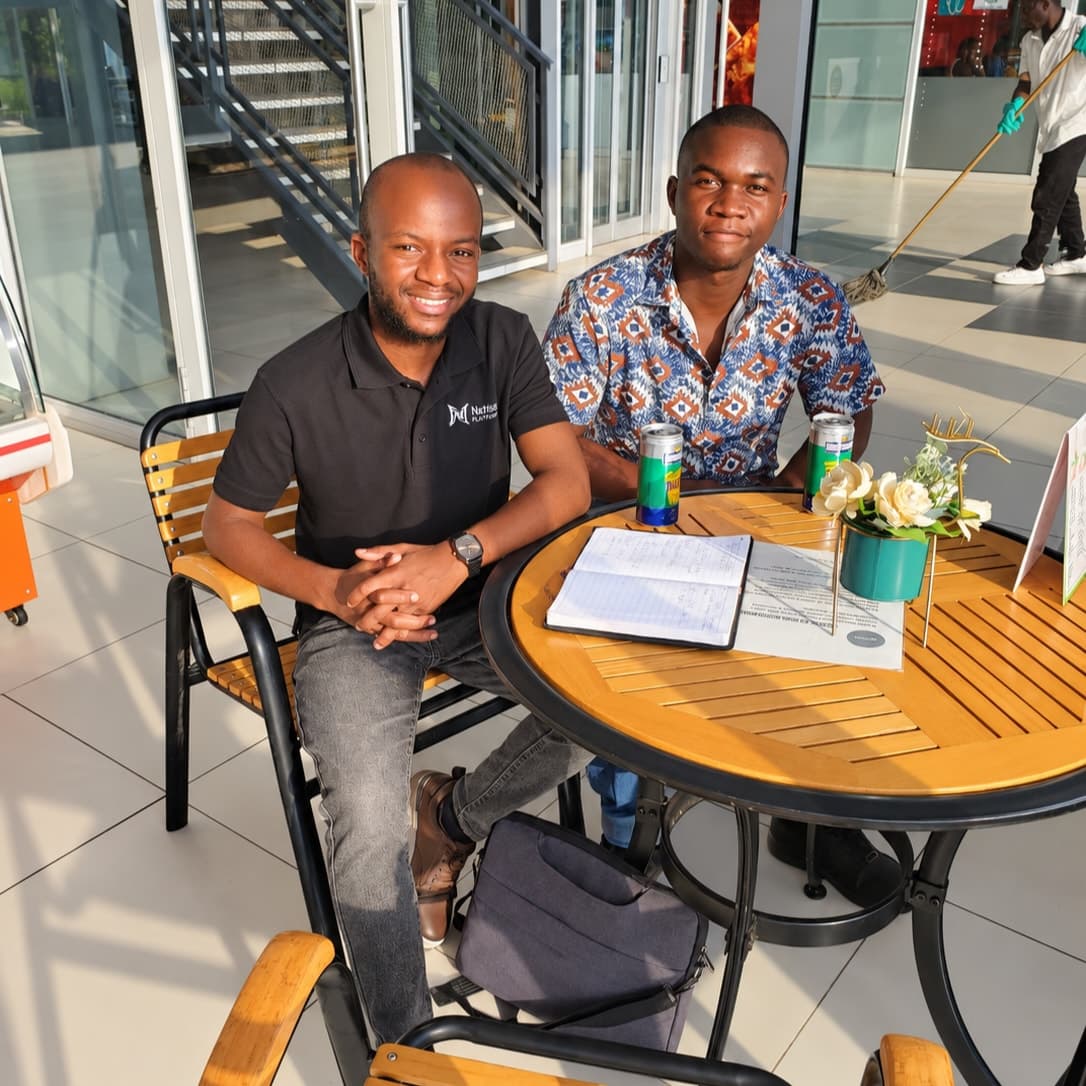
That question stayed with me after a conversation with Elisha Zulu, my legal officer, while preparing the Nzitsa Nzeru AI seminars. I wanted those talks to draw on people who know the Zambian environment. Research matters, but so does hearing how someone actually approaches the work.
We discussed what AI can contribute to legal practice, where it can mislead, and what becomes harder when a convincing answer or recording is easy to produce. The thread running through the conversation was responsibility: someone still has to examine what the tool produces before another person relies on it.
Starting with how Elisha actually uses AI
Elisha described using ChatGPT and Claude mainly for faster summarisation and deeper study. That is a useful starting point because it is a specific use, grounded in his own experience.
A summary can help a reader organise a difficult subject and identify questions worth pursuing. The original text still matters. If a summary removes an exception, the reader may remember a simple rule that the source never actually stated.
For me, that makes verification part of learning. Can I find the passage behind this explanation? What was left out? Do I understand the qualification well enough to explain why it matters?
Making the law easier to understand without changing it
We spent time on the distance between formal legal language and everyday understanding. Someone may speak English comfortably and still struggle with a contract. Someone else may understand an explanation more readily in Nyanja. Limited literacy adds another barrier, which a written translation alone may not address.
AI could help by explaining a clause in plain English, offering a local-language explanation, or producing a spoken version. Those possibilities deserve investigation because understanding an obligation affects the questions a person can ask before agreeing to it.
The risk we discussed was dilution. A translation can sound natural while losing the legal meaning.
Consider a hypothetical agreement that allows termination only after written notice and an opportunity to correct a breach. An explanation that says “either party can end the agreement” has removed conditions that may matter greatly. Easier wording has come at the cost of accuracy.
A useful tool would keep the original clause visible beside the explanation. A qualified legal reviewer would check that the meaning survives, and a competent speaker would check that the language communicates it properly. Asking the listener to explain the obligation back in their own words could reveal a misunderstanding that fluent output conceals.
That is a practical question for local AI development: how do we make legal information accessible while preserving the details people need?
Fast research needs sources you can open
We also discussed research. AI can organise an answer quickly and present it well. In law, those qualities are useful only alongside a reliable account of the relevant authorities.
Elisha raised a concern about gaps in the digitisation and accessibility of Zambian precedent. His observation was about the difficulty of obtaining locally relevant sources; we did not conduct an audit of how much case law is digitised. Existing work matters here: ZambiaLII already provides public access to Zambian judgments and legislation.
The question is whether the particular tool can locate the right material and use it correctly. A source being online does not establish that a model encountered it during training, or that a search-enabled tool will retrieve it. Even a real citation may be described inaccurately.
For a legal argument, the reviewer needs to open the authority, read the relevant passage, and establish whether it supports the point being made. The jurisdiction and current legal position matter too. An answer about another country's law can sound convincing while being unsuitable for a Zambian matter.
Our discussion of the courts made that local context concrete. Zambia's Judiciary describes a structure that includes the Supreme Court, Constitutional Court, Court of Appeal, High Court, Subordinate Courts, Small Claims Courts, and Local Courts. The Supreme Court and Constitutional Court rank equivalently. A reader should not assume that every case travels through one universal ladder of courts.
“Which court, which law, and which source?” is a useful set of questions to bring to an AI answer.
A quick draft still needs a careful reader
Document preparation was another opportunity we considered. AI can help organise supplied facts and produce an initial draft, potentially reducing repetitive typing. That could leave a lawyer more time to examine the substance of a matter.
But a document can look finished while missing something important. A clause may be omitted, a definition may conflict with another provision, or a familiar template may carry assumptions that do not fit the transaction.
We also discussed using AI to flag problems in existing clauses. It might draw attention to inconsistent wording, conflicting dates, or an ambiguous obligation. That is a promising assistance role, provided the person reviewing the document understands that a flag may be mistaken and an unflagged clause may still contain a problem.
Attentive supervision means comparing the draft with the instructions, facts, and applicable law. “No issues found” cannot establish that an agreement is complete or appropriate. A qualified lawyer still needs to decide what the document should do and whether its wording achieves that purpose.
When seeing or hearing something is not enough
One of the most interesting parts of our conversation concerned evidence. AI tools can produce believable images, video, speech, and records. A voice note may sound like an admission. A document may look authentic. Their appearance cannot establish their origin.
This creates questions about fabricated material, and also about genuine material that someone dismisses by saying it could have been generated.
Imagine a disputed voice note. Before deciding what to believe, I would want to know where it came from, whether the original file exists, how it was handled, and what other information supports or contradicts it. These are practical questions for investigation; the legal treatment depends on the evidence, facts, and rules applicable to the matter.
An automated detector would not settle every dispute. Nor does the existence of AI make all digital evidence worthless. The challenge is to examine authenticity carefully and assess material in context.
For a seminar audience, that is a more useful exercise than asking people to guess whether a clip is real: what would you need to know before relying on it?
What locally relevant legal AI would require
A recurring conclusion was the value of a dependable Zambian legal knowledge base. That idea interests me as a builder because it gives the technical work a concrete purpose: make authoritative material easier to find, inspect, and explain.
A proposed assistant could retrieve passages from a reviewed collection of legislation, judgments, and public procedural guidance, then show the sources behind its answer. The collection would need dates, versions, permissions, and a process for keeping it current. Existing legal information services should inform that work.
Adding local documents would not guarantee correct interpretation. A tool could retrieve the wrong passage or overlook an exception. Evaluation by Zambian legal practitioners would therefore matter, as would the ability to say that the available sources do not support an answer.
An initial project might focus on explaining a small set of public procedural documents. That would give reviewers a defined task to evaluate before considering broader use. It is a direction worth investigating, rather than a claim that Nzitsa has already delivered a validated legal assistant.
Courts applying the law
Elisha's closing point, as I understood it, was that courts are courts of law: judgments must rest on applicable law rather than on an individual's personal sense of what seems fair. I am paraphrasing the point from our conversation.
That does not make fairness or constitutional rights irrelevant. The Judiciary's explanation of Article 118 includes principles concerning non-discrimination, timely justice, and protection of constitutional values. Those obligations are part of the framework courts apply.
For AI, the implication is straightforward. A persuasive response needs an applicable legal basis. An explanation needs to preserve the meaning it claims to communicate. Evidence needs examination beyond how convincing it appears.
Bringing this into the Nzeru seminars
We also discussed Zambia's National Artificial Intelligence Strategy. Its themes of skills, inclusion, responsible use, and access to data connect closely with the questions this conversation raised. A strategy provides direction; the work of testing specific uses remains necessary.
For the Nzitsa Nzeru seminars, I want to start with situations people recognise: a contract they cannot easily understand, a research answer with a citation, or a voice note whose source is uncertain. We can then explore what AI might contribute and what a responsible person would check.
Conversations like this help me ask better questions about what we should build at Nzitsa AI Labs. I want to hear from legal professionals, educators, language specialists, and others who can help define useful tasks and examine their risks. If you have a perspective or a practical example to contribute, please get in touch.